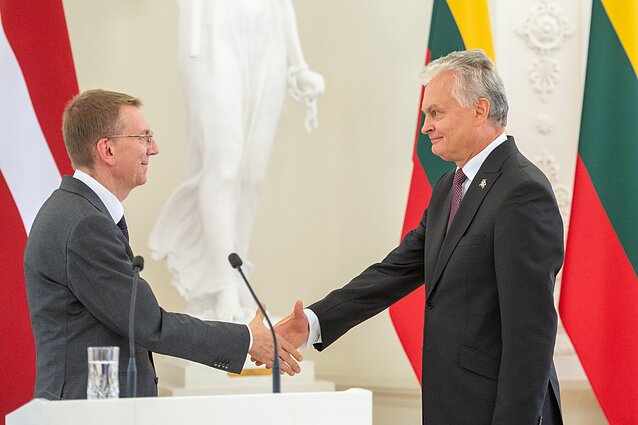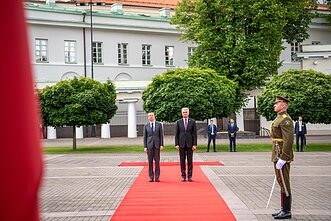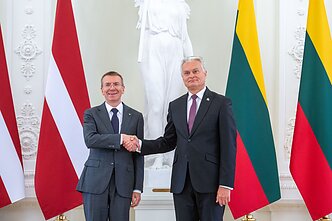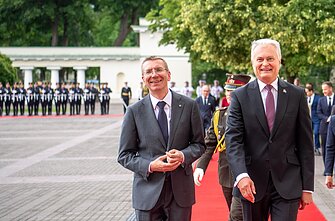


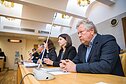






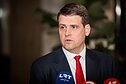



On Wednesday, Lithuanian President Gitanas Nausėda met with the newly elected president of Latvia, Edgars Rinkēvičs, in Vilnius where he urged the Baltics to speed up the decoupling from the Russian-controlled power grid.
"I invited the president to accelerate the synchronisation with continental European networks. Complete disconnection from the Russian and Belarusian electricity grids is an important task we share and we need to implement it as soon as possible," Nausėda told reporters.
Estonia, Latvia, and Lithuania are part of the Soviet-era BRELL grid, which also includes Belarus and is controlled by Moscow. The three Baltic countries planned to disconnect together from the grid in late 2025, but Vilnius has been seeking to push the date forward.
Further reading
"The withdrawal is possible as early as early next year, but I also do recognise that it would be better to withdraw together and to take a common position in this case. If I understand it correctly, Latvia's position is to postpone the withdrawal by one year and to do it nearly 2025," Nauseda said.
Rinkēvičs said Latvia was “willing to withdraw from the BRELL agreement as soon as possible”, but it was necessary to find the best solution for each country.
“There is a very clear political commitment. However, we also need to take into account that this affects all three Baltic states, affects differently – both from the technical point of view and financial point of view,” the Latvian president said.
Estonia previously agreed to speed up the decoupling to early 2025. However, Tallinn officials say it’s impossible to do it next year due to blackout risks and higher costs.

Newsletter
Every Friday morning.